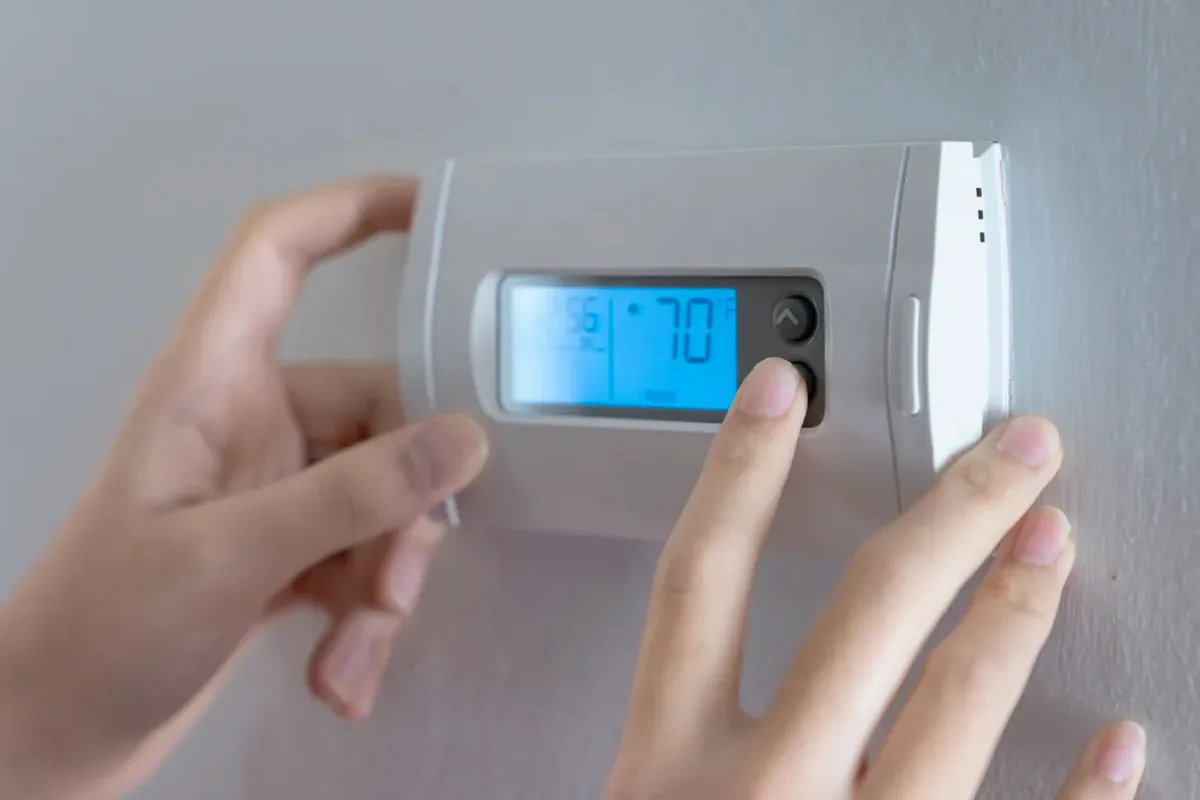
Request thermostat repair & replacement for a property in St. Thomas. Include the equipment, the problem or planned work, and your location so the request can be reviewed.
What does the thermostat display, and does the HVAC system respond consistently to a setting change?
A thermostat that will not turn on, displays an unexpected temperature, or causes irregular cycling may have a problem with its power, sensor, wiring, relay, calibration, or the heating and cooling equipment it controls. The symptom alone does not establish which part has failed. Inspection can distinguish a repairable thermostat fault from a need for replacement, while a proposed programmable or smart model must be compatible with the system’s wiring, staging, and control functions.
Note whether the display is blank, whether the reading differs from the room’s observed condition, and how the equipment responds to a setting change. The thermostat model and HVAC equipment type help establish compatibility and control wiring. A qualified assessment can test the control and distinguish its fault from an equipment problem before recommending repair or replacement.
Thermostat power, wiring, sensors, relays, calibration, and cycling symptoms
Repair-versus-replacement decisions for existing controls
Programmable and smart thermostat compatibility with staged systems and heat pumps
Assessment and Scope
Questions for the Proposed Work
01
Test the control before replacing it
A blank display, inaccurate reading, or short cycling can involve batteries or power, a sensor, wiring, a relay, calibration, or the connected HVAC system. Testing should identify whether the thermostat is actually causing the symptom before the device is removed. Wiring and internal electrical checks are not occupant tasks. The model, displayed reading, and observed equipment response provide useful context for a qualified assessment and help avoid treating an unrelated furnace or heat-pump fault as a thermostat failure.
02
Repair or replace based on the fault
Repair may suit a specific, correctable problem when the thermostat remains serviceable and compatible with the equipment. Replacement may be appropriate when the control is damaged, lacks a needed function, or cannot work with a planned HVAC change. Age alone does not decide the scope. Comparing the diagnosed fault, available control functions, and compatibility requirements makes the choice clearer without assuming that a smart thermostat is automatically the better option.
03
Check compatibility before choosing smart controls
Programmable and smart thermostats differ in wiring needs and supported equipment. Before selecting one, confirm whether the system is single-stage, multi-stage, or a heat pump and whether existing wiring supports the intended functions. Some controls also require particular power or communication connections. Features such as schedules and remote access should be weighed against the household’s needs, while compatibility with the equipment manufacturer’s control requirements remains the installation priority.
Compare the next step
Explain the user access needs and proposed control position, then ask whether that location represents the controlled space. Compare supported remote sensors or interfaces where direct relocation is unsuitable. Keep the device usable without placing it where sunlight, a heat source, or unusual air movement distorts its purpose. Ask the user to review the proposed interface for readable information and practical operation. Compare local buttons, supported remote functions, and sensor options with the equipment and the actual access need.
Thermostat wiring is not universal. Do not connect wires by colour alone or work on energized wiring; a compatible control must be configured for the equipment it serves.